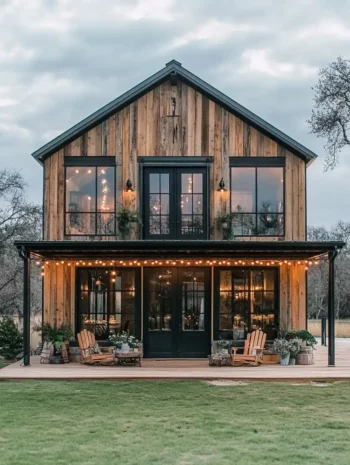
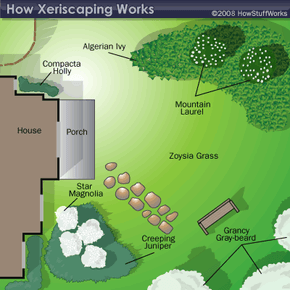
Xeriscaping principles focus on water conservation through landscaping. They emphasize using drought-resistant plants and efficient irrigation methods.
Xeriscaping, a sustainable landscaping method, minimizes water use while maintaining a beautiful garden. It involves selecting native or drought-tolerant plants that thrive in arid conditions. Efficient irrigation techniques, such as drip systems, reduce water wastage. Mulching helps retain soil moisture and suppresses weeds.
Grouping plants with similar water needs ensures optimal water distribution. Proper soil preparation enhances water absorption and root growth. Xeriscaping not only conserves water but also reduces maintenance costs and promotes biodiversity. This eco-friendly approach contributes to environmental sustainability and is perfect for areas prone to water scarcity.
Introduction To Xeriscaping
Xeriscaping is a landscaping method that reduces water use. This method uses drought-tolerant plants and efficient irrigation techniques. It is perfect for areas with limited water resources. This approach helps conserve water and maintain beautiful landscapes.
Water-wise Gardening
Water-wise gardening is a key principle of xeriscaping. It focuses on using plants that need minimal water. This type of gardening saves water and reduces maintenance. Plants like succulents, cacti, and native species are ideal choices. These plants thrive in dry conditions and look stunning.
Here are some tips for water-wise gardening:
- Choose drought-resistant plants.
- Group plants with similar water needs together.
- Use mulch to retain soil moisture.
- Install efficient irrigation systems.
History And Origins
Xeriscaping has its roots in ancient water conservation practices. The term “xeriscaping” was coined in the 1980s in Denver, Colorado. The word comes from the Greek word “xeros,” meaning dry. This method became popular in arid regions of the United States. Today, xeriscaping is practiced worldwide.
Here’s a brief timeline of xeriscaping:
- Ancient civilizations use water-saving techniques.
- 1980s: The term “xeriscaping” is introduced.
- 1990s: Xeriscaping gains popularity in the U.S.
- 2000s: Global adoption of xeriscaping principles.
Xeriscaping is not just a trend. It is a sustainable way to garden and save water.
Benefits Of Xeriscaping
Xeriscaping offers numerous benefits to homeowners and the environment. This landscaping method conserves water and saves money. The advantages of xeriscaping make it an excellent choice for sustainable living.
Environmental Impact
Xeriscaping significantly reduces water consumption. This helps in water conservation. Traditional lawns require frequent watering. In contrast, xeriscaped gardens thrive on minimal water. This reduces the strain on local water resources.
Xeriscaping supports native plant species. Native plants are adapted to local climates. They require less water and maintenance. This promotes biodiversity and supports local wildlife. Additionally, xeriscaping reduces soil erosion. The deep-rooted plants stabilize the soil and prevent erosion.
Cost Efficiency
Xeriscaping lowers water bills. The plants used need less water. This leads to significant savings over time. Traditional gardens can be expensive to maintain. Xeriscaped gardens require minimal upkeep.
Initial costs for xeriscaping might seem high. But the long-term savings are substantial. You save on water, fertilizers, and garden maintenance. In the long run, xeriscaping is a cost-effective choice.
| Benefits | Description |
|---|---|
| Water Conservation | Uses minimal water, reducing water bills. |
| Low Maintenance | Requires less effort and fewer resources. |
| Supports Biodiversity | Encourages native plants and wildlife. |
| Soil Erosion Prevention | Deep roots help to stabilize the soil. |
| Cost Savings | Reduces expenses on water and maintenance. |
- Water conservation is a key benefit of xeriscaping.
- Low maintenance makes it an attractive option.
- Supports biodiversity and local wildlife.
- Prevents soil erosion with deep-rooted plants.
- Cost savings are significant in the long run.
Planning Your Xeriscape
Planning your xeriscape is the first step to creating a water-efficient garden. It requires careful thought and design to ensure success. This process involves understanding your site, designing with xeriscaping principles, and selecting appropriate plants.
Site Analysis
Begin by analyzing your site. Look at the sun exposure. Areas with full sun need different plants than shaded areas. Check the soil type. Sandy soil drains quickly, while clay soil holds water. Identify slopes and flat areas. Water flows differently in each.
Consider existing plants and structures. Trees, shrubs, and buildings affect light and water. Note any problematic spots. Areas with poor drainage or heavy foot traffic need special care.
| Factors | Details |
|---|---|
| Sun Exposure | Full sun, partial shade, full shade |
| Soil Type | Sandy, loamy, clay |
| Topography | Slopes, flat areas |
| Existing Elements | Trees, shrubs, buildings |
Design Principles
Apply xeriscaping design principles to your garden plan. Group plants with similar water needs. This creates hydrozones, which simplify watering. Use native and drought-tolerant plants. These plants thrive with less water.
Incorporate mulch to retain moisture. Mulch reduces evaporation and weeds. Plan for efficient irrigation. Drip irrigation systems deliver water directly to roots. Design paths and hardscapes to reduce water usage. Gravel paths and patios need no water.
- Group plants by water needs
- Use native, drought-tolerant plants
- Incorporate mulch
- Plan efficient irrigation
- Design water-saving paths and hardscapes
Follow these design principles to create a thriving xeriscape. Your garden will be beautiful and water-efficient.
Soil Improvement
Soil improvement is crucial for successful xeriscaping. Healthy soil supports plant growth and conserves water. It enhances soil structure, boosts nutrient content, and improves water retention.
Soil Testing
Before making changes, conduct a soil test. Testing helps you understand soil pH, nutrient levels, and texture. Use a soil test kit or send samples to a lab. The results guide you on necessary amendments.
Soil testing reveals the type of soil you have. Sandy, clay, or loamy soils require different treatments. Knowing your soil type helps in choosing the right plants and amendments.
Amendments And Mulching
Based on your soil test, add amendments. Common amendments include compost, manure, and peat moss. These materials improve soil structure and fertility.
Compost adds organic matter and nutrients. Manure enriches the soil with nitrogen. Peat moss helps with moisture retention. Adding these amendments makes the soil more fertile.
Mulching is also vital. Mulch reduces water evaporation, controls weeds, and enriches the soil. Organic mulches like straw, wood chips, and leaves are great choices. Spread mulch around plants, keeping it a few inches away from stems.
Here is a summary of common soil amendments and their benefits:
| Amendment | Benefit |
|---|---|
| Compost | Improves fertility and structure |
| Manure | Increases nitrogen levels |
| Peat Moss | Enhances moisture retention |
Use these amendments wisely to create a thriving xeriscape garden.
Plant Selection
Selecting the right plants is crucial in xeriscaping. Plants must thrive in low-water conditions. This ensures a sustainable and beautiful garden. Let’s explore two key aspects of plant selection: native plants and drought-resistant species.
Native Plants
Native plants are naturally adapted to your region. They require less water and care. These plants have evolved in the local climate. They are more resilient to pests and diseases. Here are some benefits of using native plants:
- Low water requirements
- Reduced maintenance
- Support for local wildlife
- Better resistance to local pests
Consider these native plants for your xeriscape garden:
| Region | Native Plant |
|---|---|
| Southwest USA | Desert Marigold |
| Pacific Northwest | Oregon Grape |
| Midwest | Little Bluestem |
| Southeast USA | Southern Magnolia |
Drought-resistant Species
Drought-resistant species can survive long periods without water. These plants have special adaptations. They store water in leaves or stems. They also have deep root systems. This helps them access water deep in the soil.
Here are some popular drought-resistant species:
- Cacti
- Succulents
- Lavender
- Sage
- Agave
These plants offer several benefits:
- Reduced need for irrigation
- Lower maintenance costs
- Attractive appearance
- Improved soil health
Choose these plants to create a lush, water-efficient garden. They will thrive with minimal care and water.
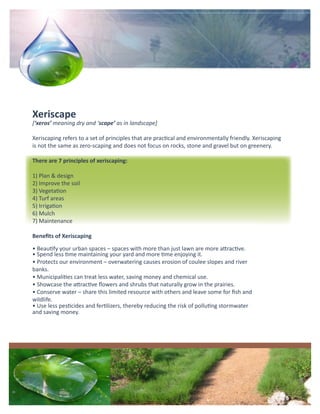
Credit: www.slideshare.net
Efficient Irrigation
Efficient irrigation is vital for successful xeriscaping. It ensures plants get the right amount of water. This method conserves water and saves money. Efficient irrigation reduces water waste and promotes healthy plant growth. Two key components are drip systems and watering schedules.
Drip Systems
Drip systems deliver water directly to plant roots. This method is highly efficient. It minimizes evaporation and runoff. A drip system uses tubes with small holes. These tubes release water slowly and evenly. This ensures plants get the right amount of water. Drip systems are easy to install and maintain.
Below is a table showing the benefits of drip systems:
| Benefit | Description |
|---|---|
| Water Conservation | Uses less water than traditional methods |
| Reduced Evaporation | Water goes straight to roots |
| Cost-Effective | Saves money on water bills |
| Easy Maintenance | Simple to set up and repair |
Watering Schedules
Watering schedules are crucial for xeriscaping. They help ensure plants get water at the right times. A well-planned schedule avoids overwatering and underwatering. Follow these steps for an effective watering schedule:
- Water early in the morning.
- Check soil moisture regularly.
- Adjust frequency based on plant needs.
- Use a timer for consistency.
Use a moisture sensor to help. It tells you when to water. This prevents guesswork and saves water.
Efficient irrigation supports a thriving xeriscape garden. By using drip systems and smart watering schedules, you can achieve beautiful, sustainable landscaping.
Maintenance Tips
Xeriscaping is a landscaping method designed to reduce water use. It involves selecting drought-resistant plants and minimizing lawn areas. Proper maintenance ensures your xeriscape garden stays healthy and beautiful. Below are some maintenance tips to keep your garden thriving.
Weed Control
Weeds compete with your plants for nutrients and water. Removing them keeps your plants healthy.
- Mulching: Apply a thick layer of organic mulch. Mulch helps to suppress weed growth.
- Hand Weeding: Regularly pull out weeds by hand. Focus on the roots to prevent regrowth.
- Weed Barriers: Use landscape fabric or plastic sheeting under mulch. This creates a barrier against weeds.
| Method | Frequency | Effectiveness |
|---|---|---|
| Mulching | Once per season | High |
| Hand Weeding | Weekly | Medium |
| Weed Barriers | Annually | High |
Seasonal Care
Seasonal care is crucial for a thriving xeriscape garden. Each season requires different tasks.
- Spring: Prune dead branches and clean up debris. Add fresh mulch and compost.
- Summer: Water deeply but infrequently. Check for pests and diseases.
- Fall: Remove fallen leaves and plant cover crops. Prepare the garden for winter.
- Winter: Protect sensitive plants from frost. Water sparingly.
Following these tips ensures your xeriscape garden flourishes year-round. Proper maintenance minimizes water use and keeps plants healthy. Enjoy a beautiful, sustainable landscape.

Credit: slideplayer.com
Common Xeriscaping Myths
Xeriscaping is a sustainable way to garden in dry climates. Yet, many myths surround this eco-friendly practice. Let’s debunk some common misconceptions and understand the truth.
Misconceptions
Many people think xeriscaping means having a yard full of rocks and cacti. Others believe it means sacrificing beauty for water savings. These ideas are far from the truth.
Fact Vs. Fiction
| Myth | Truth |
|---|---|
| Xeriscaping is only for deserts. | Xeriscaping works in many climates. |
| Xeriscaping is boring and unattractive. | Xeriscaping can be lush and colorful. |
| Xeriscaping means no grass. | You can include drought-tolerant grasses. |
| Xeriscaping costs a lot to install. | It can save money over time. |
| Xeriscaping needs no maintenance. | It requires some care, like any garden. |
- Myth: Xeriscaping is only for deserts.
- Truth: Xeriscaping works in many climates.
- Myth: Xeriscaping is boring and unattractive.
- Truth: Xeriscaping can be lush and colorful.
- Myth: Xeriscaping means no grass.
- Truth: You can include drought-tolerant grasses.
- Myth: Xeriscaping costs a lot to install.
- Truth: It can save money over time.
- Myth: Xeriscaping needs no maintenance.
- Truth: It requires some care, like any garden.

Credit: www.duralawn.ca
Frequently Asked Questions
What Are Xeriscaping Principles?
Xeriscaping principles include planning and design, soil improvement, efficient irrigation, selecting drought-tolerant plants, mulching, and appropriate maintenance. These principles aim to conserve water, reduce maintenance, and create sustainable landscapes.
What Are Two Disadvantages Of Using Xeriscaping In Landscaping?
Two disadvantages of xeriscaping are limited plant variety and initial setup costs. Drought-tolerant plants restrict design options. Initial investment can be high.
Which Best Practice Is Used When Xeriscaping?
Use native, drought-tolerant plants, mulch to retain moisture, group plants by water needs, and install efficient irrigation systems.
What Are The Characteristics Of Xeriscaping?
Xeriscaping features drought-tolerant plants, efficient irrigation, soil improvement, mulching, minimal lawn areas, and proper maintenance. It conserves water and reduces landscape upkeep.
Conclusion
Embracing xeriscaping can transform your garden into a sustainable oasis. Save water, reduce maintenance, and support local ecosystems. Applying these principles ensures a beautiful, eco-friendly landscape. Start xeriscaping today to enjoy a thriving, water-efficient garden. Your efforts will benefit both the environment and your wallet.