Landscape designers create functional and aesthetically pleasing outdoor spaces. They plan and execute designs for gardens, parks, and other outdoor areas.
Landscape designers transform outdoor spaces into beautiful and functional environments. They work with clients to understand their needs and preferences. These professionals then draft designs that include plants, trees, walkways, and other features. They also consider factors like soil quality, climate, and maintenance requirements.
By combining creativity with technical knowledge, landscape designers enhance the beauty and usability of various outdoor areas. Their work not only boosts curb appeal but also adds value to properties. Whether for residential or commercial projects, landscape designers play a crucial role in creating inviting and sustainable outdoor spaces.
Role Of Landscape Designers
Landscape designers play a vital role in transforming outdoor spaces. They blend creativity with technical skills to create functional and beautiful environments. Their work enhances both residential and commercial properties.
Creative Vision
A landscape designer’s creative vision sets the stage for stunning designs. They imagine how a space can look and feel. This vision includes selecting plants, colors, and materials that complement each other. They design layouts that balance aesthetics with practicality.
They also consider themes and styles. For example, a modern garden or a classic English garden. The goal is to reflect the client’s personality and preferences. This creative process turns ordinary spaces into extraordinary ones.
Technical Skills
Technical skills are crucial for landscape designers. They use specialized software for creating detailed plans. They understand soil types, drainage, and climate conditions. This knowledge ensures the longevity and health of the landscape.
They also coordinate with other professionals. This includes architects, engineers, and contractors. Clear communication and technical expertise ensure the project runs smoothly. Safety and sustainability are always a priority.
| Skill | Description |
|---|---|
| Software Proficiency | Using CAD and 3D modeling tools |
| Botanical Knowledge | Understanding plant species and growth patterns |
| Project Management | Overseeing timelines and budgets |
- They ensure the design fits the client’s needs.
- They solve site-specific challenges.
- They follow local regulations and codes.
Landscape designers blend art and science. Their work creates enjoyable and sustainable outdoor spaces.
Site Analysis
Site analysis is a crucial part of landscape design. It involves evaluating the existing conditions of a site. This helps landscape designers create functional and beautiful outdoor spaces. A thorough site analysis includes several key elements.
Soil Testing
Soil testing is essential for understanding the soil’s health. It helps designers determine the soil’s nutrient levels. This information is vital for choosing the right plants.
Soil testing involves:
- Checking pH levels
- Identifying soil texture
- Measuring nutrient content
Designers use this data to improve soil quality. They might add compost or other amendments. This ensures a healthy environment for plant growth.
Climate Considerations
Climate considerations are another crucial part of site analysis. Designers study the local climate to select suitable plants. This includes understanding temperature ranges and precipitation patterns.
Important climate factors include:
- Sunlight exposure
- Wind patterns
- Rainfall amounts
By analyzing these factors, designers can create resilient landscapes. They choose plants that thrive in the given conditions. This reduces the need for excessive watering and maintenance.
| Element | Importance |
|---|---|
| Soil Testing | Ensures healthy plant growth |
| Climate Considerations | Helps select suitable plants |
Design Process
The design process is a crucial part of a landscape designer’s job. It involves turning ideas into beautiful outdoor spaces. This section will explore the key stages of the design process.
Concept Development
Concept development is the first step in the design process. Landscape designers start by meeting with clients to understand their needs and preferences. They discuss the client’s vision for the outdoor space. This includes elements like plants, water features, and seating areas.
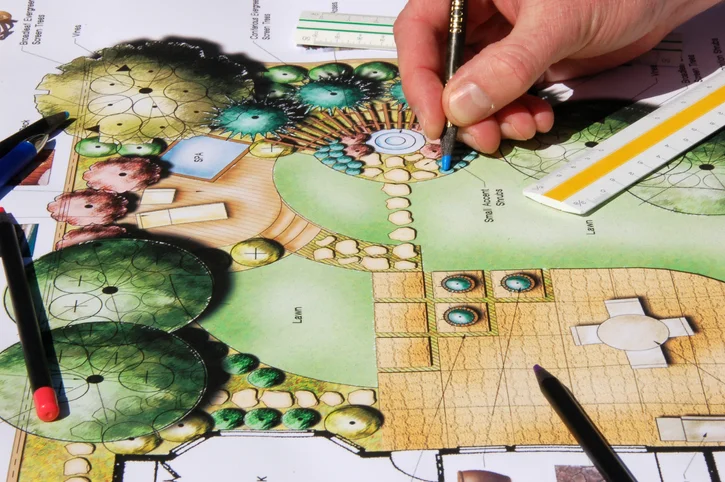
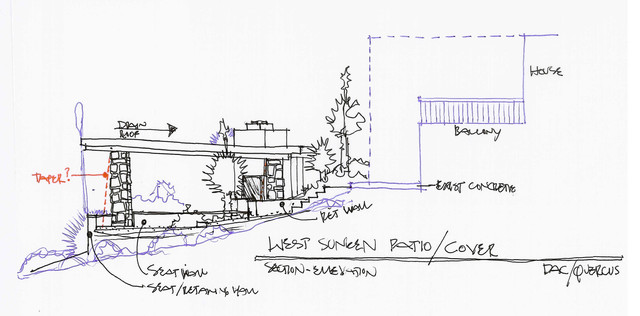
Designers then create initial sketches and mood boards. These tools help visualize the overall look and feel of the project. They consider the site’s natural features, such as slopes, soil types, and existing vegetation. This helps ensure the design works harmoniously with the environment.
| Client Input | Design Tools |
|---|---|
| Vision | Sketches |
| Preferences | Mood Boards |
| Needs | Site Analysis |
Drafting Plans
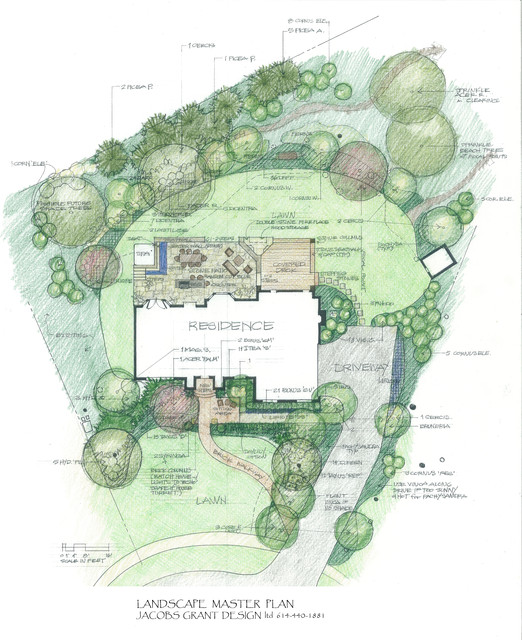
Once the concept is approved, designers move to drafting plans. These plans are detailed and precise. They include scaled drawings that show the layout of the landscape. Designers use CAD software to create these plans. This software helps ensure accuracy and efficiency.
Drafting plans also involve choosing specific plants and materials. Designers select plants based on climate, soil, and aesthetic appeal. They also choose hardscape materials like pavers, stones, and wood. These elements are all detailed in the plans.
- Scaled Drawings
- CAD Software
- Plant Selection
- Material Choice
Finally, the plans include installation guidelines. These guidelines help contractors bring the design to life. They detail where each element should go and how it should be installed. This ensures the final result matches the designer’s vision.
Credit: www.houzz.com
Plant Selection
One of the most important tasks for a landscape designer is plant selection. Choosing the right plants can make a garden flourish. Plants bring life, color, and texture to outdoor spaces. This section will explore the key aspects of plant selection.
Native Plants
Native plants are those that naturally grow in a specific area. They are well-suited to the local climate and soil. Native plants need less water and maintenance. They also support local wildlife like birds and bees. Using native plants helps create a sustainable garden.
- Low Maintenance: Requires less care and resources.
- Eco-Friendly: Supports local ecosystems.
- Drought Resistant: Thrives with minimal water.
Seasonal Variations
Choosing plants for all seasons keeps the garden lively year-round. Different plants bloom in different seasons. Mixing them ensures color and interest throughout the year.
| Season | Plant Types |
|---|---|
| Spring | Tulips, Daffodils |
| Summer | Roses, Lilies |
| Fall | Chrysanthemums, Asters |
| Winter | Evergreens, Holly |
Planting a variety ensures year-round beauty. Seasonal plants also attract different pollinators. This helps keep the garden healthy.
Hardscape Elements
Landscape designers create beautiful outdoor spaces. They use hardscape elements to add structure and function. These elements include patios, walkways, and water features.
Patios And Walkways
Patios are flat areas where people relax. They are often made of stone or concrete. A well-designed patio can be a home’s outdoor living room.
Walkways connect different areas of a yard. They guide people through the landscape. Walkways can be made from brick, stone, or gravel.
Both patios and walkways add value to a home. They make the space more usable and attractive.
Water Features
Water features include ponds, fountains, and waterfalls. These elements add beauty and tranquility to a garden. The sound of water can be very soothing.
A small fountain can fit in any garden. Larger water features like ponds need more space. They can also support fish and plants.
Water features attract birds and other wildlife. They make a garden feel alive and vibrant.
Credit: www.houzz.com
Sustainability Practices
Landscape designers play a crucial role in promoting sustainability. They use various techniques to ensure that outdoor spaces are eco-friendly and resource-efficient. Two key practices are Water Conservation and the use of Eco-Friendly Materials.
Water Conservation
Water conservation is essential in landscape design. Designers use several strategies to save water:
- Installing drip irrigation systems to reduce water waste.
- Choosing drought-resistant plants that need less water.
- Using mulch to retain soil moisture.
These methods help in reducing water usage and maintaining the beauty of the landscape.
Eco-friendly Materials
Using eco-friendly materials is another vital practice. Landscape designers often opt for:
- Recycled materials like reclaimed wood and recycled plastics.
- Natural stones that require minimal processing.
- Permeable pavers that allow water to seep into the ground.
These materials reduce the carbon footprint and promote sustainability in landscape projects.
Client Collaboration
Client collaboration is the heart of landscape design. Designers work closely with clients to bring their vision to life. This involves understanding their needs, preferences, and lifestyle. Let’s dive into the key stages of this collaboration process.
Initial Consultation
The initial consultation sets the stage for the project. It’s the first meeting where the designer and the client discuss ideas. The designer asks questions to understand the client’s vision. They talk about the client’s goals, budget, and timeline.
During this meeting, the designer may also visit the site. This helps them understand the space better. They take notes and photos for reference. This visit is crucial for creating a design that fits the space perfectly.
Here are some key points discussed during the initial consultation:
- Client’s preferences and style
- Budget constraints
- Project timeline
- Site conditions
Feedback And Revisions
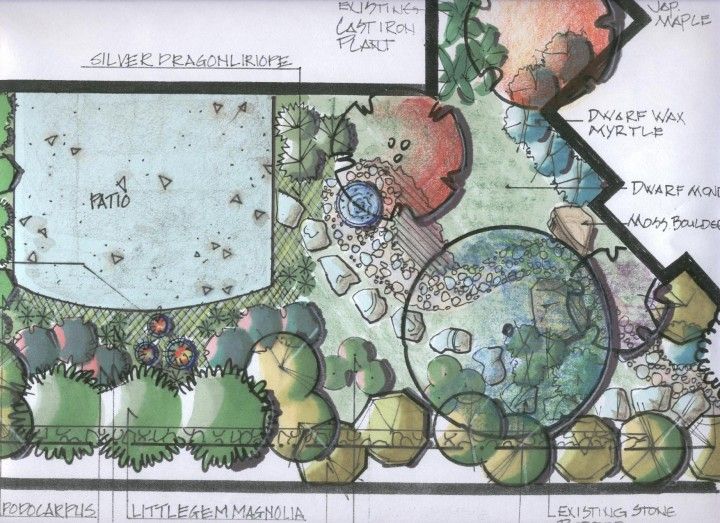
Once the initial design is ready, the designer presents it to the client. This is a collaborative process. The client reviews the design and provides feedback. The designer listens carefully to understand the client’s thoughts.
Based on the feedback, the designer makes necessary revisions. This may involve changing plant selections, altering layouts, or adjusting materials. The goal is to create a design that meets the client’s expectations.
Here’s a simple table showing the feedback and revision process:
| Step | Action |
|---|---|
| 1 | Client reviews the design |
| 2 | Provides feedback |
| 3 | Designer makes revisions |
| 4 | Final design approval |
Open communication is key during this stage. Both the client and the designer work together to refine the design. This ensures the final plan is both beautiful and functional.
Credit: roundtreelandscaping.com
Project Management
Effective project management is crucial for landscape designers. It ensures that all aspects of the project run smoothly. From start to finish, designers coordinate various tasks. They handle budgeting, timeline coordination, and resource allocation.
Budgeting
Landscape designers create a detailed budget plan for each project. They estimate costs for materials, labor, and equipment. They also consider unexpected expenses. This ensures the project stays within financial limits. Proper budgeting helps avoid costly surprises.
| Expense | Estimated Cost |
|---|---|
| Materials | $5000 |
| Labor | $3000 |
| Equipment | $2000 |
| Contingency | $1000 |
Timeline Coordination
Designers develop a project timeline to keep tasks on track. They set deadlines for each phase. This includes planning, installation, and final touches. They coordinate with contractors and suppliers to ensure timely delivery. Keeping a strict timeline helps meet client expectations.
- Planning Phase: 2 weeks
- Installation Phase: 4 weeks
- Final Touches: 1 week
Frequently Asked Questions
What Are The Duties Of A Landscape Designer?
A landscape designer creates outdoor spaces, plans layouts, selects plants, and oversees installation. They ensure functionality and aesthetic appeal.
What Is The Difference Between A Landscape Architect And A Landscape Designer?
A landscape architect creates large-scale designs, often involving public spaces, and requires a license. A landscape designer focuses on residential projects and doesn’t need a license.
What Does A Typical Day Look Like For A Landscape Designer?
A landscape designer’s day involves client meetings, site visits, creating design plans, selecting plants, and coordinating with contractors. They also handle project management and budgeting tasks.
How Do You Prepare To Be A Landscape Designer?
Earn a degree in landscape architecture or design. Gain experience through internships. Develop skills in design software. Build a portfolio showcasing your work. Obtain necessary certifications and licenses.
Conclusion
Landscape designers transform outdoor spaces into beautiful and functional areas. They plan, design, and oversee projects to meet client needs. Their expertise enhances property value and creates enjoyable environments. Hiring a landscape designer ensures a well-thought-out and visually appealing outdoor space.
Embrace their skills to bring your vision to life.